Wednesday, September 23, 2009

"W" is for Wine Vinegars

Products from Niagara Vinegars in Niagara, Ontario

Wine vinegar has many places in the culinary world. Vinegar derives from the French word, “vin aigre”, meaning sour wine. Many commercial wine vinegars are made from cheap wine. Stainless steel tanks are filled with wine and bacteria. Compressed air is blown into the tank, causing the “acebacter” or bacteria to eat the alcohol and turn the wine into vinegar.

In commercial processes this can take place from three hours to three days. Quality wine vinegars take time to produce, however. Quality versions are made through the “Orleans Method,” originally proposed by Louis Pasteur. Named after the French city of Orleans, this process provides three main ingredients – food (the wine), air and a dark, warm environment (oak barrels). Oak barrels are filled with wine, then inoculated with an actively fermenting vinegar. Taking from nine months to a year, the wine slowly turns to vinegar, all the while developing complex flavours.

While of French decent, the Californians have capitalized on this concept of “varietal” wine vinegars. This means the vinegar is produced from a specific grape variety. For example, Chardonnay Vinegar is produced from the Chardonnay white wine, made from the Chardonnay grape. Cabernet Sauvignon vinegar is made from the varietal wine called Cabernet Sauvignon, deriving from the same red grape.

Many food and wine lovers assume that Chardonnay wine would be a perfect match for a salad drizzled in a “Chardonnay vinaigrette." After all, both are made from Chardonnay grapes, obviously possessing similar flavours. Right?

Not quite. It's not quite that simple because it's important to harmonize the taste sensations of each, not the name of the grape on both bottles.

The primary building block in Chardonnay wine and in Chardonnay vinegar is acidity experienced on the palate as tanginess or sourness. That’s good. BUT …vinegar is more sour than wine. The vinaigrette's overpowering acidity makes the wine’s acidity occur as flat on the palate. The wine tastes flat, thus losing its refreshing quality. Said more simply, vinegar overpowers wine.

For the combination to harmonize, the wine should offer more tanginess or acidity than the vinaigrette.

Pairing Chardonnay wine with Chardonnay vinaigrette can work, providing you use the vinaigrette sparingly and incorporate proteins into the salad, such as cheese, nuts and/or flesh (chicken, ham). By doing this you dispurse and decrease the intensity of the vinegar in the salad, allow the wine to remain MORE sour.

If the wine vinegar uses with other ingredients like fruit, then be sure to look at the overall sweetness level. If the vinaigrette is sweet, then consider pairing the salad with a wine possessing some sweetness, such as a semi-sweet Riesling. Again, make sure the wine is more sweet than the vinaigrette.

Niagara Vinegars based in Niagara produces a wide range of wine vinegars fused with other fruit flavours, such as peach chardonnay, raspberry baco noir, and juicy orange vidal. Consider the sweetness level in these vinegars to choose the appropriate wine. This company produce some of the most delicious vinaigrettes I've tasted.

The point is that considering the taste sensations of the wine and the vinaigrette is more important than marrying the grape variety used in both.

Niagara Vinegars also produces rice wine. Rice wine is far softer than white or cider vinegar and is the ideal product to incorporate into a vinaigrette that is being married to wine. A salad drizzled in rice vinegar is the perfect partner for Pinot Gris.

My favourite vinegarette made by this company is Ruby Red Grapefruit. It is juicy and outstanding. Every time I serve this product on salads for guests, I'm forced to give the bottle away. This vinaigrette is a crowd pleaser. You don't need a lot to make your salad taste fabulous.

It's a little tart for wine, so be sure to add some proteins into the salad like toasted peacans to have it pair with wine. Marry salads in this vinaigrette to crisp, dry white wines, such as Sauvignon Blanc and dry Riesling.

I purchase my Niagara Vinegars at Firehouse Gourmet in East City, Peterborough. However, the their products are available throughout Ontario and Canada, I believe. To find out where the vinegars are availabile in your town or city go to: http://www.niagaravinegars.com/ or call 905-685-0385.

Wednesday, September 16, 2009

"V" is for Vinho Verde


I recently rediscovered one of my favourite white wines from Portugal called Vinho Verde while dining at a local Greek restaurant about a month ago. I had ordered the chef’s specialty of fried calamari with tzatziki. “Vinho Verde is my recommendation,” the sommelier declared. I agreed.

I fell in love with this crisp, dry white wine all over again. Vinho Verde possesses spritzy effervescence and a distinctive lemony flavor that complements dishes with lemony or tangy flavoured ingredients. Vinho Verde served with sizzling, fried calamari with a splash of fresh lemon juice and a side order of tangy, garlicky tzatziki was nothing short of heavenly. Since this experienced I’ve purchased several different brands of this Portuguese wine to match to dishes I create at home.

For example, one chilling night last week, I decided to make Armenian lentil soup. While it may simmer for hours, this simple recipe contains nothing more than vegetable broth, dried lentils, olive oil, lots of garlic and plenty of fresh lemon juice. These ingredients harmonize with the crisp acidity and lemony flavor of a chilled Vinho Verde. The hot soup also contrasted nicely with a glass of this chilled wine that boasts light carbonation and tart, refreshing acidity.

Vinho Verde is a region located in the historic province of Minho, in the northwest corner of Portugal between the Douro River and the Minho River. The climate is fairly humid and cool. Unlike the trellising systems used in North America to train vines, the vines in Vinho Verde are trained up trees in what is called the hanging system, or on traditional pergolas. These ancient systems are slowly being replaced with cross-shaped cruzetas, garlands and fencing. The name Vinho Verde means ‘green wine’ but refers to the crisp acidity rather than to the wine’s colour. The grapes used to produce this wine are alvarinho and loureiro. The most sought after vinhos derive from the Albarinho grape (Albariño across the border in Spain).

Three qualities of Vinho Verde are produced. Vinho regional is the lowest level classification. It is similar to the designation of vin de pays in France. The IPR (Indicacao de Proveniencia Regulamentada) is the next level of quality and is similar to the VDQS in France. The DOC (Denominacao de Origem Controlada) is the equivalent of AOC in France and VQA in Ontario, and is Portugal’s highest rank of quality wine.

The LCBO carries a selection of Vinho Verde ranging in price from $8.00 to $20.00. The inexpensive ones serve as an accompaniment for appetizers featuring citrus, sour cream, yogurt or vinaigrette flavours. Pricier versions are an excellent match for seafood and chicken entrees highlighting the same tangy flavours.


Due to its tanginess, this crisp white is an excellent match for seafood and fish. Drizzle either in fresh lemon juice and you'll have a pairing that creates the MOAN Factor for you and your guests.

Friday, September 11, 2009

"U" is for Unfiltered Wines


It seems food and wine lovers are becoming obsessed with the idea of buying local, quality and natural or preservative free products. It’s no wonder, then, that Ontario’s wineries are following suit, on the heels of California, and producing wines that are not filtered or, said properly, unfiltered. The question is are unfiltered wines really of better quality than fined and filtered ones? Or is this concept more of a marketing ploy?

First, what exactly, is an unfiltered wine? First, let’s look at the process called filtration. Filtration takes place after the juice has been fermented and the wine, racked off its lees or “sediment”, has been fined. Fining is a clarifying process. A small amount of gelatin or egg whites is mixed with a little wine and poured into the container. At some point, the albuminous matter coagulates the solids in the wine and falls to the bottom of the cask. This process can be done once or twice, depending on the winemaker’s style and choice. The wine is then pumped off of this sediment into a new container and then filtered. The wine is sent through filter pads, of varying degrees of thickness or thinness, to get rid of any remaining sediment. This leaves the resulting wine clear and bright and ready for maturation in vats, casks or bottles.

An unfiltered wine does not undergo filtration. The reason is that some winemakers or wine aficionados believe that filtration can strip a wine of significant important properties and flavours. These experts believe that an unfiltered wine retains more richness, body, colour and aging ability.

Other experts disagree; believing that filtration is necessary to avoid unnecessary risks, such as a secondary fermentation in the bottle and to ensure the wine will remain healthy and not go bad. Some also believe that filtering a wine does not really strip the wine of any noticeable elements. Opinions differ as to whether the idea of unfiltered wines is another marketing ploy.

Either way, many of Ontario’s wineries are producing filtered and unfiltered wines, thereby giving the general public the choice. You often see the title ‘unfiltered’ on the label, but little is said on the backside of the bottle as to what this actually means. My assumption is that most people would see the word ‘unfiltered’ and thereby feel justified in paying a $20.00 price or over.

Should you buy an unfiltered wine? It is really better than a filtered one? Opinions will always differ regarding this question. The level of filtration depends largely on the thickness of the filter itself. The thicker the filter, the more sediment is extracted from the wine and thereby also more of the wine’s character. Thinner filters strip less sediment and character. When buying wine the consumer does not know what kind of filter has been used on the wine by the winemaker. So, finding unfiltered wines with plenty of character is a matter of experimentation. In fact, it might be an idea to buy two bottles of the same grape variety, bottled and produced in the same year by the same winery -- a filtered an unfiltered one. Then, you can discover the differences for yourself. Do we want to drink unfiltered wines? Why not? Ontario has many. The enjoyment of wine is in the exploration and discovery of regions, grape varieties and winemaking styles. Just remember that unfiltered wines have more sediment left in the bottle, which means you may want to decant.
Unfiltered wines do provide a level of prestige, however, and will certainly impress guests who like to follow the latest trends. Personally, I have yet to discover any large differences in an unfiltered wine. For me the bottom line is not about whether a wine has been filtered or not; it is more about whether I like it, despite how it has been produced, and of course, the price I am willing to pay for a wine.

Friday, September 4, 2009

"T" is for Tinfoil.

This past weekend my girlfriend Michelle and her new boyfriend invited my husband and I over to their cottage for dinner. Michelle prepared for us a delicious tinfoil feast on the barbecue.

Tinfoil barbecuing is easy and convenient, keeps the grill clean, and produces flavourful and moist foods. The idea is to make pouches from the tinfoil that hold the foods and sit on the barbecue. This style of grilling also allowed Michelle to walk away from the barbecue and spend more time with Jack and I.

Michelle prepared large pouches, each containing various vegetables and fish. She grilled a steak, too, just in case we didn't like fish.

The barbecue itself was small, so she grilled one pouch at a time, putting cooked ones into the oven to keep warm.

Tinfoil pouches require some form of moisture to keep foods from drying out. You can use a couple of tablespoons of salad dressings, sauce, butter, stock, marinade, wine or even water.

Cooking times depend on the heat of the coals. Obviously, the hotter the grill, the faster the foods will cook. Generally, delicate fish take about ten to twelve minutes to cook. Salmon and tuna are thicker and can take about twenty minutes. Hamburger and chicken require from twenty five to thirty minutes. Turn the packages over so each side gets equal cooking time. Keep the lid closed. Opening it too often can add additional grilling time. Be careful if you’re using a fork to check the food for doneness. If the fork punctures the foil, moisture will escape and dry out the foods.

A wide variety of vegetables, such as asparagus, green beans and potatoes can be cooked in tinfoil pouches. Michelle prepared
three varieties of potatoes, cutting them into thick wedges. She tossed the wedges with organic olive oil and Italian seasoning.
The rosemary in the seasoning demanded a wine with some bitterness. Michelle served a chilled Lindeman’s bin 85 pinot grigio from Southern Australia (CSPC 668947), $10.95. This white had enough weight to stand up to the heaviness of potatoes and offered pleasant bitterness that harmonized with the rosemary in the seasoning. We also enjoyed green beans sprinkled with toasted almonds and crisp greens with Gorgonzola. Pinot grigio worked well with these items, as well.

Our perch was drizzled in lemon juice and sprinkled with finely chopped fresh cilantro. The tinfoil kept the fish tender, moist and scrumptious. The sourness of the lemon juice worked nicely with the refreshing acidity in the wine.

Just as with other styles of cooking, tinfoil barbecued dinners can complement a wide range of wines. When considering a combination of foods in the meal, think about the spices, herbs and sauces. Pair the wine to the most predominant flavours.

If serving several flavours within one meal, choose ones that will likely harmonize with the same wine. A safe approach is to keep the meal simple by adding only salt and pepper. Salt complements the sourness in crisp, dry white wines and mellows the bitterness and astringency in big, heavy red wines.

Saturday, August 29, 2009

"S" is for Salt

Did you know that there’s more than 14,000 uses for salt? Besides being a flavourful condiment, salt has unlimited uses in the kitchen. It is a cleaning agent, by itself or in combination with other substances. A solution of sea salt and water will clean the bottom of your wine decanter, removing all the red wine stains and sediment.
Salt is the world's oldest known food additive. We were born with the ability to distinguish and crave salt for our survival. Salt keeps our bodies hydrated. Severe salt depletion would kill, so we’ve evolved to seek out salt when we need it. Our nerves and muscles require salt to function.

In the world of our senses, salt is considered a predominant taste sensation experienced on our tongue. We crave the saltiness of a wide variety of ingredients and foods. For this reason it must be considered when pairing wine to food. The level of saltiness in food will change the taste of the wine.

There are as many different types and kinds of salts from around the world as there are wines. Sea salt is a favourite, containing trace elements and minerals that are good for us, that is when consumed in moderation. Considering the flavor it provides, on a pinch-by-pinch basis, a quality sea salt can certainly be a reasonable, culinary investment.

Wales produces Halen Mon, a sea salt harvested from the Atlantic waters. Fleur de sel, meaning the ‘flower of salt’, comes from the island of Ré, off France's Atlantic coast. Since the seventh century, the sun and wind have evaporated the sea water, leaving fine crystals that are harvested in July and August from the surface. Fleur de sel is recognized for its delicate flavour and concentration of minerals. Fleur de sel does not bit the tip of the tongue like table salt. It is best used as a condiment where its finest qualities, such as its delicate flavour and texture, will shine. England, New Zealand, Australia and Hawaii all produce their own salts from the sea. Celtic gray sea salt was once a well-kept secret, highly regarded by food writers and chefs around the world. This salt comes from the marshes of Brittany on the coast of France. Celtic gray sea salt is more widely available and is now more reasonably priced.

Local bulk stores and gourmet food shops sell sea salt at a reasonable price. Sea salt brings out the natural flavors of ingredients and provides texture and appearance to dishes.

Sea salt complements both white and red wines. Saltiness, in general, contrasts well with the sourness or acidity in crisp, white wines, such as sauvignon blanc, aligote, gruner veltiliner, muscadet, viognier and vinho verde. Salty foods, such as smoked salmon, raw oysters, cheeses like feta or goat’s milk and even potato chips. Salty foods can work well with red wines, as well. The saltiness in foods works with the bitterness from the tannin in heavy, red wines Red wines with lots of tannin, such as cabernet sauvignon, cabernet franc, barberesco, barolo and pinotage naturally complement salty cheeses like parmesan and blue cheese.

Here’s a tip … if you purchase a red wine with too much bitterness, sprinkle more salt on the accompanying dish. The saltiness will soften the taste of the bitterness in the wine.

Friday, August 21, 2009

"R" is for Rice Papers

Vegetarian Spring Rolls


A few years ago I volunteered to make all of the appetizers from my girlfriend’s wedding. After creating all the tasty bites, I had this feeling, a familiar one, that I just had not made enough food. When alcohol is being served at events like weddings, it’s important that guests have enough food so they don’t get too silly too quickly.

After rummaging through my cupboards, I came up with a package of rice papers and a few cans of tuna. In the refrigerator I found wasabi paste and mayonnaise. I had fresh greens on hand.

I made a stack of Tuna Spring Rolls with Fresh Herbs and Wasabi Mayonnaise. (Recipe below)

Interesting, my quick and easy spring rolls made with rice paper were the first nuggets to be demolished by hungry guests.

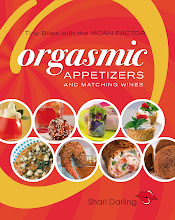
I decided to include this recipe in my most recent cookbook entitled Orgasmic Appetizers and Matching Wines – Tiny Bites with the MOAN Factor.

I love rice papers. They are so inexpensive and easy to work with. Because they don’t possess any real flavour, the filling is the most important element to consider when pairing with wine.

For a quick meal, I make vegetarian spring rolls with fresh avocado, tomato, lettuce, cucumber, and fresh herbs, like basil. Forgo the dressing. Toss the vegetables in fresh lemon or limejuice, and pair these simple treats with Sauvignon Blanc. The lemon flavours harmonizes with the wine. (See photo above).

This thin, almost translucent paper can be purchased in various sizes, from small to large, round and square. To use the rice paper, just fill a large bowl with warm water. Slip the paper into the bowl and let it soak until the paper becomes soft and pliable. Set the soft paper on the cutting board. Place your filling close to the end of the paper. Roll up the filling, tucking in the ends.

If you’re using the rice paper raw to make spring rolls or appetizers for weddings, be sure to use two papers per roll. The longer the rolls slit, the softer they become and will no doubt split. So, double up on the papers. Make your first roll, then wrap the roll in another sheet.

Rice paper treats can also be deep fried, pan fried or baked. Deep fried rolls taste great when paired with a dipping sauce. Be sure to take the taste sensations of the sauce into consideration when pairing your rolls with wine. Fill the rolls with left-overs like rice or salad and pan fry.

Limitless spring roll and wine pairings exist.

Salmon spring rolls with a coriander dipping sauce call for a well balanced, medium bodied white, such as Chardonnay (with no oak).

Chicken spring rolls with a hoison dipping sauce has sweetness and therefore needs a white wine with some sweetness, such as a semi sweet Riesling.

Banana and mango spring rolls drizzled in dark chocolate demand Icewine.

You can even pair a lovely Pinot Noir with pork spring rolls.

Here’s the recipe for the tuna spring rolls:

Tuna Spring Rolls with Fresh Herbs & Wasabi Mayonnaise
Serves 4 to 6

2 6 ounce cans tuna (in water)
½ cup mayonnaise (try fat free)
1 tbsp wasabi paste
2 tbsp each of finely chopped fresh mint, cilantro and basil
sea salt to taste
freshly ground black pepper to taste
6 rice paper rounds (6-inches in diameter)
Mixed grees (as needed)
Vegetable oil (as needed)

Combine the tuna, mayonnaise, wasabi and fresh herbs in a bowl. Season the mixture with salt and pepper. Set aside.

Pour hot tap water into another bowl. Place 1 rice paper round in the water and let it soak for 15 seconds, until it’s soft. Pull the round from the water, letting the excess water drip off. Be careful not to split the rice paper.

Place the round on a work surface. Place 1 tbsp on tuna mixture on each round. Add a small handful of mixed greens to the runa. Fold the round over the ingredients, then roll the rice paper wrapper into a jellyroll (folding over the sides and ends to ensure the filling stays in.) Repeat the process if you’re double-wrapping. Coat your serving dish with a fine layer of vegetable oil to keep the rolls from sticking to it. Place a damp cloth over the rolls and refrigerate them until they’re ready to serve, but no more than 2 hours.

Wine Suggestion: Choose a semi-sweet white wine, such as Riesling. The wine’s sweetness harmonizes with the sweetness in mayonnaise. The wine’s sweetness also nicely offsets the heat from wasabi.

Friday, August 14, 2009

"Q" is for Quiche and Sparkling Wine

Crustless Bacon and Tomato Quiche
Recipe Below

Wine has a few challenges, such as pickles. Traditionally, eggs are also considered a difficult ingredient to pair to wine. Eggs are alkaline in nature, which is believed to clash with the wine’s acidity. While this may be true, the Burgundians cook eggs in red wine. Some folks have no problem partnering an aged cheddar soufflé with red Bordeaux.

As far as this wino’s concerned, quiche works with wine. On first consideration, you may believe we should marry the most predominant flavours of a quiche with specific wines. So, for example, a quiche consisting of aged cheddar might work with a big, red wine, such as Bordeaux. While this combination no doubt works, who in their right mind, would spend hard earned money on a fine Bordeaux only to pair it with a simple egg dish? Not moi! If I served a red Bordeaux, my guests would also be chewing on a juicy mouthful of Filet Mignon! So, while this combination may work theoretically, it certainly lacks in common sense.

Most well made quiche is best to be harmonious in all its ingredients. This means that the cheese, meat and vegetables can be flavourful, yet not overpowering to the delicate nature of eggs.

While quiche -- made with heavy cream – works wonderfully with a creamy textured Chardonnay, I prefer a lighter styled, all-purpose white wine. Sparkling wine! Bubblies are multi-purposed and ideal for every occasion -- whether you’re serving quiche for breakfast, brunch, lunch, dinner or as an appetizer.

Sparkling wine has a good backbone of acidity that contrasts nicely with the saltiness in all cheeses, while cleaning the palate and not overpowering the delicate taste of eggs. It’s also festive, transforming an average brunch into an afternoon celebration.

For some, the topic of sparkling wine can be a bit challenging. After all, sparkling wine is made in various countries, styles, sweetness levels and quality standards.

Champagne is the most famous of sparkling wines. It is also the most northerly wine region in France. So, Champagne is the name of both the French province and the name of its sparkling wine. The grapes grown and vinified to produce this wine are Pinot Noir (providing backbone and structure), Pinot Meunier (contributing freshness and aroma), and/or Chardonnay (offering Champagne’s finesse and elegance).

There are generally a few types of Champagne. Grande Marque is considered a top Champagne from a particular company, such as La Grande Dame from Veuve Clicquot-Ponsardin. Grand Cru is made from vineyards rated at 100% in quality. Premier Cru is Champagne made from grapes from villages rated at 90 to 99%. Blanc de Noir is a white Champagne made from the black grapes, Pinot Noir and/or Pinot Meunier. Blanc de Blanc is a white Champagne made mostly from Chardonnay grapes. Rose has a tiny amount of red wine blended into its cuvee (blend).

Champagne and sparkling wines from around the world are made in various ways. Champagne and quality sparkling wines, such as some produced in Ontario, are made in a time consuming, traditional and most expensive method called “methode champenoise.” (You’ll see this term on the label if the bubbly was produced in this way.) The less expensive ways of making sparkling wine are the transfer method and the charmat method. These terms are not generally offered on the front label.

When purchasing sparkling wine, be aware of the level of dosage on the label. This represents the wine’s sweetness. Brut is the driest sparkling wine and the best match for quiche, at about one percent. Contrary to its name, extra dry is not quite as dry as Brut and offers more smoothness on the palate. It is about one to three percent. Sec has a hint of sweetness, from three to five percent. Demi-sec is semi-sweet, from five to eight percent. Doux is sweet, from eight to 15%.

Before serving Champagne or sparkling wine, be sure to chill it well, at least an hour in the refrigerator. When opening Champagne and sparkling wine, always keep a napkin over the cork and your hand on top of the napkin and over the cork as you turn. Turn the bottle away from your guests. (When you open the bottle, you have in your hands, about 165 pounds per square inch of pressure.) This is enough pressure to dent a wall or badly hurt someone. The long, flute glass is the best for sparkling wine as its small mouth opening helps to retain the bubbles for a longer time.

Sometimes I enjoy a white with quiche, but most often I choose sparkling wine. Just be sure that the wine or bubbly does not over power the subtle and delicate nature of this dish.

Crustless Bacon and Tomato Quiche
Serves 4
1 cup shredded cheddar
1/2 cup chopped spring onions
1 medium tomato, thinly sliced
1 tsp fresh lemon juice
6 thin strips cooked peameal bacon
salt and pepper to taste
4 eggs
2/3 cup flour
1/3 cup melted butter
1 tbsp baking powder
dash cayenne
1 2/3 cups milk

Preheat oven to 400 F. Spray a 9-inch pie plate with non-stick cooking spray. Layer cheddar, then onions, then tomato slices in the pie plate. Drizzle with lemon juice. Lay peameal bacon strips over tomato slices. Salt and pepper to taste. Set aside.

In a food processor or blender, blend eggs, flour, butter, baking powder, cayenne. Slowly add milk, blending until ingredients are well incorporated. Pour mixture over bacon. Bake 30 minutes or until center of quiche springs back and is golden. Do not overbake. Let stand for 7 to 10 minutes before serving.