Saturday, August 29, 2009

"S" is for Salt

Did you know that there’s more than 14,000 uses for salt? Besides being a flavourful condiment, salt has unlimited uses in the kitchen. It is a cleaning agent, by itself or in combination with other substances. A solution of sea salt and water will clean the bottom of your wine decanter, removing all the red wine stains and sediment.
Salt is the world's oldest known food additive. We were born with the ability to distinguish and crave salt for our survival. Salt keeps our bodies hydrated. Severe salt depletion would kill, so we’ve evolved to seek out salt when we need it. Our nerves and muscles require salt to function.

In the world of our senses, salt is considered a predominant taste sensation experienced on our tongue. We crave the saltiness of a wide variety of ingredients and foods. For this reason it must be considered when pairing wine to food. The level of saltiness in food will change the taste of the wine.

There are as many different types and kinds of salts from around the world as there are wines. Sea salt is a favourite, containing trace elements and minerals that are good for us, that is when consumed in moderation. Considering the flavor it provides, on a pinch-by-pinch basis, a quality sea salt can certainly be a reasonable, culinary investment.

Wales produces Halen Mon, a sea salt harvested from the Atlantic waters. Fleur de sel, meaning the ‘flower of salt’, comes from the island of Ré, off France's Atlantic coast. Since the seventh century, the sun and wind have evaporated the sea water, leaving fine crystals that are harvested in July and August from the surface. Fleur de sel is recognized for its delicate flavour and concentration of minerals. Fleur de sel does not bit the tip of the tongue like table salt. It is best used as a condiment where its finest qualities, such as its delicate flavour and texture, will shine. England, New Zealand, Australia and Hawaii all produce their own salts from the sea. Celtic gray sea salt was once a well-kept secret, highly regarded by food writers and chefs around the world. This salt comes from the marshes of Brittany on the coast of France. Celtic gray sea salt is more widely available and is now more reasonably priced.

Local bulk stores and gourmet food shops sell sea salt at a reasonable price. Sea salt brings out the natural flavors of ingredients and provides texture and appearance to dishes.

Sea salt complements both white and red wines. Saltiness, in general, contrasts well with the sourness or acidity in crisp, white wines, such as sauvignon blanc, aligote, gruner veltiliner, muscadet, viognier and vinho verde. Salty foods, such as smoked salmon, raw oysters, cheeses like feta or goat’s milk and even potato chips. Salty foods can work well with red wines, as well. The saltiness in foods works with the bitterness from the tannin in heavy, red wines Red wines with lots of tannin, such as cabernet sauvignon, cabernet franc, barberesco, barolo and pinotage naturally complement salty cheeses like parmesan and blue cheese.

Here’s a tip … if you purchase a red wine with too much bitterness, sprinkle more salt on the accompanying dish. The saltiness will soften the taste of the bitterness in the wine.

Friday, August 21, 2009

"R" is for Rice Papers

Vegetarian Spring Rolls


A few years ago I volunteered to make all of the appetizers from my girlfriend’s wedding. After creating all the tasty bites, I had this feeling, a familiar one, that I just had not made enough food. When alcohol is being served at events like weddings, it’s important that guests have enough food so they don’t get too silly too quickly.

After rummaging through my cupboards, I came up with a package of rice papers and a few cans of tuna. In the refrigerator I found wasabi paste and mayonnaise. I had fresh greens on hand.

I made a stack of Tuna Spring Rolls with Fresh Herbs and Wasabi Mayonnaise. (Recipe below)

Interesting, my quick and easy spring rolls made with rice paper were the first nuggets to be demolished by hungry guests.

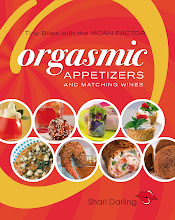
I decided to include this recipe in my most recent cookbook entitled Orgasmic Appetizers and Matching Wines – Tiny Bites with the MOAN Factor.

I love rice papers. They are so inexpensive and easy to work with. Because they don’t possess any real flavour, the filling is the most important element to consider when pairing with wine.

For a quick meal, I make vegetarian spring rolls with fresh avocado, tomato, lettuce, cucumber, and fresh herbs, like basil. Forgo the dressing. Toss the vegetables in fresh lemon or limejuice, and pair these simple treats with Sauvignon Blanc. The lemon flavours harmonizes with the wine. (See photo above).

This thin, almost translucent paper can be purchased in various sizes, from small to large, round and square. To use the rice paper, just fill a large bowl with warm water. Slip the paper into the bowl and let it soak until the paper becomes soft and pliable. Set the soft paper on the cutting board. Place your filling close to the end of the paper. Roll up the filling, tucking in the ends.

If you’re using the rice paper raw to make spring rolls or appetizers for weddings, be sure to use two papers per roll. The longer the rolls slit, the softer they become and will no doubt split. So, double up on the papers. Make your first roll, then wrap the roll in another sheet.

Rice paper treats can also be deep fried, pan fried or baked. Deep fried rolls taste great when paired with a dipping sauce. Be sure to take the taste sensations of the sauce into consideration when pairing your rolls with wine. Fill the rolls with left-overs like rice or salad and pan fry.

Limitless spring roll and wine pairings exist.

Salmon spring rolls with a coriander dipping sauce call for a well balanced, medium bodied white, such as Chardonnay (with no oak).

Chicken spring rolls with a hoison dipping sauce has sweetness and therefore needs a white wine with some sweetness, such as a semi sweet Riesling.

Banana and mango spring rolls drizzled in dark chocolate demand Icewine.

You can even pair a lovely Pinot Noir with pork spring rolls.

Here’s the recipe for the tuna spring rolls:

Tuna Spring Rolls with Fresh Herbs & Wasabi Mayonnaise
Serves 4 to 6

2 6 ounce cans tuna (in water)
½ cup mayonnaise (try fat free)
1 tbsp wasabi paste
2 tbsp each of finely chopped fresh mint, cilantro and basil
sea salt to taste
freshly ground black pepper to taste
6 rice paper rounds (6-inches in diameter)
Mixed grees (as needed)
Vegetable oil (as needed)

Combine the tuna, mayonnaise, wasabi and fresh herbs in a bowl. Season the mixture with salt and pepper. Set aside.

Pour hot tap water into another bowl. Place 1 rice paper round in the water and let it soak for 15 seconds, until it’s soft. Pull the round from the water, letting the excess water drip off. Be careful not to split the rice paper.

Place the round on a work surface. Place 1 tbsp on tuna mixture on each round. Add a small handful of mixed greens to the runa. Fold the round over the ingredients, then roll the rice paper wrapper into a jellyroll (folding over the sides and ends to ensure the filling stays in.) Repeat the process if you’re double-wrapping. Coat your serving dish with a fine layer of vegetable oil to keep the rolls from sticking to it. Place a damp cloth over the rolls and refrigerate them until they’re ready to serve, but no more than 2 hours.

Wine Suggestion: Choose a semi-sweet white wine, such as Riesling. The wine’s sweetness harmonizes with the sweetness in mayonnaise. The wine’s sweetness also nicely offsets the heat from wasabi.

Friday, August 14, 2009

"Q" is for Quiche and Sparkling Wine

Crustless Bacon and Tomato Quiche
Recipe Below

Wine has a few challenges, such as pickles. Traditionally, eggs are also considered a difficult ingredient to pair to wine. Eggs are alkaline in nature, which is believed to clash with the wine’s acidity. While this may be true, the Burgundians cook eggs in red wine. Some folks have no problem partnering an aged cheddar soufflé with red Bordeaux.

As far as this wino’s concerned, quiche works with wine. On first consideration, you may believe we should marry the most predominant flavours of a quiche with specific wines. So, for example, a quiche consisting of aged cheddar might work with a big, red wine, such as Bordeaux. While this combination no doubt works, who in their right mind, would spend hard earned money on a fine Bordeaux only to pair it with a simple egg dish? Not moi! If I served a red Bordeaux, my guests would also be chewing on a juicy mouthful of Filet Mignon! So, while this combination may work theoretically, it certainly lacks in common sense.

Most well made quiche is best to be harmonious in all its ingredients. This means that the cheese, meat and vegetables can be flavourful, yet not overpowering to the delicate nature of eggs.

While quiche -- made with heavy cream – works wonderfully with a creamy textured Chardonnay, I prefer a lighter styled, all-purpose white wine. Sparkling wine! Bubblies are multi-purposed and ideal for every occasion -- whether you’re serving quiche for breakfast, brunch, lunch, dinner or as an appetizer.

Sparkling wine has a good backbone of acidity that contrasts nicely with the saltiness in all cheeses, while cleaning the palate and not overpowering the delicate taste of eggs. It’s also festive, transforming an average brunch into an afternoon celebration.

For some, the topic of sparkling wine can be a bit challenging. After all, sparkling wine is made in various countries, styles, sweetness levels and quality standards.

Champagne is the most famous of sparkling wines. It is also the most northerly wine region in France. So, Champagne is the name of both the French province and the name of its sparkling wine. The grapes grown and vinified to produce this wine are Pinot Noir (providing backbone and structure), Pinot Meunier (contributing freshness and aroma), and/or Chardonnay (offering Champagne’s finesse and elegance).

There are generally a few types of Champagne. Grande Marque is considered a top Champagne from a particular company, such as La Grande Dame from Veuve Clicquot-Ponsardin. Grand Cru is made from vineyards rated at 100% in quality. Premier Cru is Champagne made from grapes from villages rated at 90 to 99%. Blanc de Noir is a white Champagne made from the black grapes, Pinot Noir and/or Pinot Meunier. Blanc de Blanc is a white Champagne made mostly from Chardonnay grapes. Rose has a tiny amount of red wine blended into its cuvee (blend).

Champagne and sparkling wines from around the world are made in various ways. Champagne and quality sparkling wines, such as some produced in Ontario, are made in a time consuming, traditional and most expensive method called “methode champenoise.” (You’ll see this term on the label if the bubbly was produced in this way.) The less expensive ways of making sparkling wine are the transfer method and the charmat method. These terms are not generally offered on the front label.

When purchasing sparkling wine, be aware of the level of dosage on the label. This represents the wine’s sweetness. Brut is the driest sparkling wine and the best match for quiche, at about one percent. Contrary to its name, extra dry is not quite as dry as Brut and offers more smoothness on the palate. It is about one to three percent. Sec has a hint of sweetness, from three to five percent. Demi-sec is semi-sweet, from five to eight percent. Doux is sweet, from eight to 15%.

Before serving Champagne or sparkling wine, be sure to chill it well, at least an hour in the refrigerator. When opening Champagne and sparkling wine, always keep a napkin over the cork and your hand on top of the napkin and over the cork as you turn. Turn the bottle away from your guests. (When you open the bottle, you have in your hands, about 165 pounds per square inch of pressure.) This is enough pressure to dent a wall or badly hurt someone. The long, flute glass is the best for sparkling wine as its small mouth opening helps to retain the bubbles for a longer time.

Sometimes I enjoy a white with quiche, but most often I choose sparkling wine. Just be sure that the wine or bubbly does not over power the subtle and delicate nature of this dish.

Crustless Bacon and Tomato Quiche
Serves 4
1 cup shredded cheddar
1/2 cup chopped spring onions
1 medium tomato, thinly sliced
1 tsp fresh lemon juice
6 thin strips cooked peameal bacon
salt and pepper to taste
4 eggs
2/3 cup flour
1/3 cup melted butter
1 tbsp baking powder
dash cayenne
1 2/3 cups milk

Preheat oven to 400 F. Spray a 9-inch pie plate with non-stick cooking spray. Layer cheddar, then onions, then tomato slices in the pie plate. Drizzle with lemon juice. Lay peameal bacon strips over tomato slices. Salt and pepper to taste. Set aside.

In a food processor or blender, blend eggs, flour, butter, baking powder, cayenne. Slowly add milk, blending until ingredients are well incorporated. Pour mixture over bacon. Bake 30 minutes or until center of quiche springs back and is golden. Do not overbake. Let stand for 7 to 10 minutes before serving.

Wednesday, August 5, 2009

"P" is for Pizza and Matching Wines


White Bean Whole Wheat Pizza with Spinach and Chevre Recipe Below
I love barbecues, and I crave pizza. So, I like to combine this cooking method and comfort food into one course. Barbecued pizza can be downright healthy, can aid you in keeping the kitchen cool on hot and humid evenings and can make for easy clean up.

The secret to a heart-smart barbecued pizza is to use a whole-wheat thin crust, fresh and local produce and whey-based cheeses. I use whole-wheat tortilla shells for my crusts.

Have you ever heard the term “curds and whey”? During the cheese making process an enzyme is added to the heated milk, starting the curdling process. The fat-soluble parts of the milk begin to clump together, floating in its watery whey. The whey is drained off the curds. The curds are made into a variety of fatty products, while the whey is used to produce fresh cheeses with generally lower fat, more moisture, and less sodium. Examples are whey cheeses are feta, Chevre, farmer’s cheese, and Boursin, to name a few.

Fresh cheeses can add loads of flavour to a barbecued pizza. How about an oregano pesto whole-wheat pizza with artichoke hearts, black olives, and Chevre? Or a basil pesto whole-wheat pizza with wild mushrooms, sun dried tomatoes, topped with Boursin? A favourite of mine is White bean and garlic whole-wheat pizza with fresh tomatoes, onions, green olives, spinach, and Chevre. The list of healthy and harmonious combinations is endless.

There are three secrets to making a fabulous barbecued pizza. Be sure to coat the perforated pizza tray with heart smart margarine. This makes the bottom of the crust golden and crunchy and sturdy enough to hold a variety of heavier ingredients. Secondly, use low or indirect heat on the grill. And lastly, refrain from walking away from the barbecuing pizza! You must watch it carefully to keep the crust from burning.

Wine is certainly healthy, as well. All wine when consumed in moderation with food helps to reduce stress. Red wine is high in antioxidants.

The fabulous thing about pairing wine to pizza is that everything goes! Pizza is a casual dish, and therefore works well with a casual wine. In other words, it would be quite appropriate to serve an easy-drinking white or red in the $10 to $15.00 range. Appropriateness is really key. It would be silly to serve a $50 to $100 rare vintage with something as simple as barbecued pizza, unless your intent is that the wine takes center stage. But even so, pizza would not do justice to a wine of this caliber.

The simplest approach is to stick to pairing wine to the cheese topping. After all, it is often the most highly flavourful ingredient on the pizza, save for anchovies.

Pizza topped with goat, feta or Boursin is tangy and so complements a tangy and crisp, dry white wine, such as Sauvignon Blanc.

Pizzas highlighting fresh fruit can also be healthy and flavourful. Chunks of fresh pineapple contrasts nicely with goat cheese on Hawaiian pizza. The sweetness of pineapple calls for a white wine with a hint of sweetness, such as semi sweet Riesling or Gewürztraminer or a rose with a hint of sweetness to match. Dry whites or reds would taste too tart alongside this pizza style.

Mexican pizza with a salsa base is often spicy and so also complements semi sweet whites and roses.

Traditional pizza with a roasted tomato base and partly skimmed mozzarella topping goes nicely with a full-bodied, barrel fermented Chardonnay. The wine’s primary building block of fattiness (big mouth feel and oily texture) works nicely with this creamy textured cheese, while it’s toasty notes complement the roasted tomato. The wine’s good acidity also balances the acidity in the tomatoes.

You can still create a healthy barbecued pizza using blue cheese, one that partners well with red wine. Use low fat blue cheese salad dressing as the base ingredient for your pizza. Add toppings, such as chicken, roasted garlic, and rosemary. Pizza featuring blue cheese requires a red wine with enough flavour to match. A medium-bodied red, such as Merlot partners well. Merlot has enough body and flavour to stand up to the soft flavour of the blue cheese dressing, but is not so full-bodied that it dominates the other flavours in this pizza.

Goat cheese also works well with the earthy character of quality Pinot Noir. Add to this a topping combination of rosemary, spinach and garlic, and you’ll have a barbecued pizza and wine marriage made in heaven.

What about pizza heavy in chorizo sausage, pepperoni, steak and Cheddar? In this case, pull out your cabs and plan to walk an extra mile the next day. Meat and cheese is both heavy and so requires a big red wine for balance. Try Cabernet Sauvignon.

Pizza can be so casual that almost any wine will do. And as I’ve always claimed, the only rule you need to follow is this …make sure you get the glass to your lips!

White Bean Whole-Wheat Pizza with Spinach and Chevre (picture)
Serves four

4 whole-wheat tortilla shells
1 cup cannelloni white beans, rinsed
3 clove garlic, minced
¼ cup heart smart oil of choice
Sea salt to taste
Freshly ground black pepper to taste
3 plum tomatoes, thinly sliced
1/4 small onion, thinly sliced
4 cups baby spinach, steamed
2 tsp finely chopped fresh rosemary
4 to 6 ounces goat cheese, crumbled
8 large stuffed green olives sliced

In a food processor or blender add beans, garlic, oil, salt and pepper.
Pulse until coarsely chopped. Season with sea salt and pepper. Butter bottom of tortilla shell and set on perforated pizza pan. Spread the tortilla shell with bean puree. Top with tomatoes, onion, and spinach. Sprinkle with rosemary and dot with goat cheese. Set pizza (in tray) on prepared grill (low heat or indirect heat). Close top and grill, watching carefully, for 4 to 5 minutes. Remove pizza with bottom is golden and cheese is melted. Repeat using remainder of ingredients for second tortilla pizza.

Wine Suggestion: Sauvignon Blanc
The saltiness of olives, bitterness of white beans and garlic and tanginess of fresh tomatoes and Chevre call for a white wine with crisp acidity. Sauvignon Blanc is ideal.

Friday, July 31, 2009

"O" is for Other Elements At Work in Wine


There’s more to the culinary experience than meets the eye, the nose, and the palate. I often discuss the primary building blocks in wine and food and how they work together. And while this gives you the ability to look at the tangible elements in each, there are also more subtle aspects at work.

Let’s pretend, for a moment, that you decide to visit the Niagara Peninsula on a hot, summer day to tour wine country in celebration of your marriage anniversary. For lunch, you and your partner head to the Niagara Escarpment to dine at a winery. While there, you both sample fresh, Canadian cheeses and sip a wonderfully crisp, dry Riesling to refresh your palate. The sun warms your shoulders as you gaze at rolling vineyards that gradually fall to meet Lake Ontario’s shoreline with the Toronto skyline in the distance. Best of all, you are experiencing and sharing these precious moments with your partner on this special, intimate occasion. An experience such as this might very well serve as one of the most memorable anniversaries you and your partner have ever experienced with this particular dry Riesling now becoming your favorite white wine.

A year goes by and on your next anniversary; you decide to relive this incredible wine touring experience with your partner but at home. You head to the local wine and cheese shops to pick up a bottle of the same dry Riesling and a few varieties of Canadian artisan cheese. You arrange the cheese tray, light the candles and await the arrival of your partner from work.

Your partner arrives but has forgotten your anniversary and is less than pleasant due to Murphy’s Law and having had to endure a dreadful day. Empathetic, you listen intently. After an hour, you begin to ignore the negativity, intent on recreating that romantic, wine country magic. As you open and pour the wine, you remind your partner that it is your anniversary. Instead of sharing your feelings of romance, your partner bites back with a sarcastic remark and continues about the day from hell. You glare across the table and say nothing as disappointment sets in.

You sip the wine. In shock you look down at your wine glass. This can’t be the wine you enjoyed that winetouring weekend in Niagara! It tastes terribly tart and metallic. You check the label to make sure you didn’t make a mistake, and you wonder if you’ve purchased the wrong vintage or if the wine has spoiled. You even begin to entertain thoughts that this isn’t your REAL partner, but an evil twin.

The wine is no doubt fine. We often fail to realize that many other elements – besides the wine’s building blocks and flavours – directly affect our taste and culinary experience from moment to moment. These elements are:

Our Mood:
Our mood – good or bad, happy or sad – will colour our experience and most certainly our opinion of the wine. Celebratory occasions almost always make any wine taste fabulous. Stress and overwhelm can cause us to ineffectively judge a wine’s character. The reason is that when under stress, our gastrointestinal system becomes acidic. This causes our palate to be acidic, which interacts with the wine’s acid and can cause a metallic taste in our mouth. (Kind of like licking a brass lollypop!)

Climate:
The time of year – the weather -- can also influence our decisions with respect to wine with food. For example, we might enjoy pairing a chilled crisp Sauvignon Blanc with goat cheese and fresh greens on a hot summer day. This wine would be less than delicious after spending a long day on the slopes, skiing. Instead, we might enjoy a glass of Cabernet Sauvignon while lounging by the fireplace to warm our chilly bones.

Environment and Temperature:
Our environment, such as sitting in a crowded, claustrophobic and loud restaurant might taint our experience with both the wine and food. The temperature of our body will also directly affect how we experience a specific wine and food combination.

Cold temperatures in both wine and food also affect flavor. Generally, cold dishes are often more highly spiced to enhance flavor. Wine loses its flavor if served too cold. The colder the wine the more flavor is decreased. By the same token, serving warm wine can give the perception that the wine is high in alcohol.

Personal Preferences:
What we like best is what we should drink and eat – despite what the critics might say. Some people mistakenly believe they will ruin their meal if they choose the "wrong" wine. They need not worry. There are so many variables involved that it is impossible to guarantee success every time. ALL wine and food pairings are gambles. The good news is that it's impossible to ruin a good meal if you select a wine that you enjoy.

Sunday, July 19, 2009

"N" is for Noodles


When pairing wine to one’s favorite noodle dish, the rule of thumb is to consider the sauce. The old rule states that we should pair white wines to white sauces, such as Alfredo and red wine to red sauces like tomato-based versions. While this rule certainly is a great starting point, also consider the noodle’s shape and consistency and match this to the sauce’s weight and texture. Said another way, marry the weight of the sauce to the density of the noodle to the weight of the wine. Otherwise, one element will dominate the others, causing the combination to be imbalanced in flavour and texture.

For example, thin, delicate noodles like angel hair or thin spaghetti are best served with light-style, thin sauces (broths) that partner well with delicate or lighter styled wines (non-oaked Chardonnay.)

Thicker noodles like fettuccine are an ideal partner for heavier sauces (meat-based), and therefore work well with heavier style wines (Cabernet Sauvignon.)

Noodles with holes or ridges -- mostaccioli (two-inch long macaroni tubes) or radiatore (about one inch long and half an inch in diameter chunks that resemble tiny radiators with rippled edges) – are great for chunkier sauces (seafood or meat) and work with big, bold wines – big, bold whites and/or big, bold reds.

Rotini (spirals) is a twisted noodle that holds bits of meat, vegetables and cheese, so it works well with heavy or chunky sauces. Capellini (angel hair) is delicate in texture and so is best suited to thinner, delicate sauces. Manicotti can be stuffed with a mixture of meat, cheese and vegetables, topped with your favorite sauce and bake.

With so many heavy and competing flavours, Manicotti is best matched to a big, full-bodied wine (Cabernet or Zinfandel.) Farfalle (bow ties) is thick enough for any sauce. Medium and wide egg noodles can be baked, tossed in soups or salads, or topped with cream, tomato, cheese or meat sauces.

Spaghetti and linguine are the perfect choice for nearly any sauce, while fettuccini is great for heavier sauces, like cheese, meat and tomato sauces. Rigatoni's ridges and holes are perfect with any sauce, from cream or cheese to the chunkiest meat sauces.

Here’s a few ideas for pairing ideas:

Tomato-based sauces with capellini noodles pair well with a light to medium red like Pinot Noir.

Spicy tomato-based sauces with farfalle, spaghetti or linguine pair well with light, fruity reds with good acidity, such as Pinot Noir.

Pesto with gnocci (potato dumpling pasta) pairs well with a big, fat Chardonnay.

Blue cheese sauces with gnocci, fettuccini or rigatoni pair well with Cabernet Sauvignon or Zinfandel.

White cheese sauces with fettuccini or rigatoni pair well with a big, fat Chardonnay.

Herb sauces with angel hair pair well with light, fruit reds, as well.
Cream-based sauces with gnocci or fettuccini pair well with a big fat Chardonnay.

Meat sauces with gnocci or fettuccini or rigatoni pair well with a big, bold Cabernet.

Oil-based sauces (olive oil and garlic) with spaghetti or linguini pair well with a big, fat Chardonnay.

Thursday, July 16, 2009

"M" is for Moscato grapes


I rarely drink sweet wines. However, I just discovered a sparkling one on the LCBO’s new general list that I plan on consuming quite regularly on hot days this summer, and I plan to serve it to my guests after barbecue entertaining.

Petalo Il Vino Dell’Amore Moscato Bottega (CSPC # 588780, $14.20, LCBO, Ontario), (SKU #580993, $17.99, B.C. Liquor Stores, B.C.) is a bubbly produced from Moscato grapes grown on the hills of Veneto, Italy. The area is renowned for rose growing, and so it is said that during flowering the bees transfer the delicate perfume from the roses to the wine, hence the name, ‘wine of love.’

Light-bodied and refreshing, Petalo possesses delicious, juicy tangerine and peach aromas and flavours. It’s like experiencing a liquid fruit salad in a flute glass. After all, it has a sugar code of 9! Best of all, this bubbles seems to sparkle forever, a nifty value –added element found in few inexpensive sparklers.

This wine attains its fresh and fruity character, not only from the Moscato grape, but through the winemaking practices. The juice undergoes a soft pressing and short fermentation, believed to release the fresh, fragrant character from the grapes. A secondary fermentation at low pressure allows the wine to retain its natural sweetness, while only reaching a minimal alcohol level of 6.5%. This fresh fruity character and low alcohol makes Petalo ideal for daytime sipping. Wines with higher alcohol often make us feel too sluggish in the sun.

Petalo is so delicious I would serve it throughout an entire evening. Hand a glass to your friends upon their arrival at your home. The appetizers served can harmonize with the wine, as well, such as warmed brie stuffed with fresh peaches, spicy coconut shrimp and melon wrapped in prosciutto. Pour your guests another glass for dinner to serve alongside a hot and spicy Thai or East Indian curry over rice or, instead, barbecued tuna or chicken topped with a peach and strawberry salsa. For those of you who don’t like to cook, order in Hawaiian pizza with pineapples. The meal could end with a glass of Petula accompanied by a bowl of tangerine wedges with a hefty dollop of frozen yogurt, poached peaches in sabayon, grilled apples with vanilla ice-cream or a hot slice of rhubarb-apple pie with a spoonful of clotted cream.

This wine of love is also the best gift to express your love for that romantic brunch, your next wedding celebration, a new baby arrival or for baptisms and birthdays.